
Cutting Pure Elements
The Unusual Substances from Chemistry Class
The typical user of band saws and circular saw machines is accustomed to cutting structural steel, tool steel, stainless steel, high-strength nickel-based alloys, or titanium and then machining them further. But very few users have ever machined pure elements.
For H.C. Starck Hermsdorf GmbH, based in Hermsdorf, Thuringia, this is exactly what they do every day. The company is one of the world’s leading suppliers of semi-finished products and components made from refractory metals such as molybdenum, tungsten, tantalum, and niobium. Due to their high melting points, these components are used in medical technology, electronics, and the aerospace industry. The company is committed to the responsible use of resources and feeds scrap and generated chips into a recycling loop.
For the task of sawing recycled, electron-beam-melted Mo ingots or bars made of high-purity tantalum (Ta) and niobium (Nb) with a cross-section of 160 x 60 mm and round stock up to Ø 207 mm - which are subsequently rolled into thin sheets for wafer production - a suitable sawing solution was sought. Since Behringer also had no prior experience with this exotic sawing application, cutting trials were arranged at the company’s in-house technology center to test various machine and tool combinations and develop a suitable sawing solution.
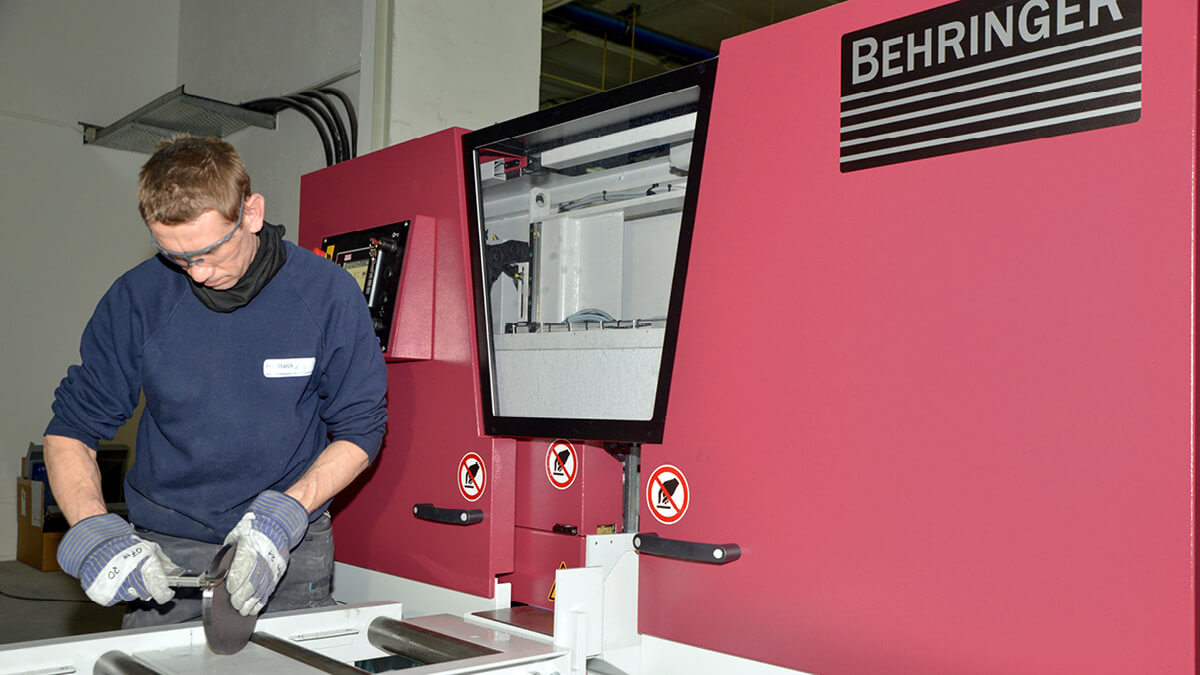
Tantalum is almost impossible to cut
“With a density of about 16.6 g/cm³, even a small piece of tantalum can’t be cut away just like that, as we were able to see firsthand during the cutting test at the Behringer Test Center. Ultimately, the successful cutting tests were also the main reason Behringer was awarded the contract,” explains Andreas Mund, project engineer in the Engineering Department at H.C. Starck.
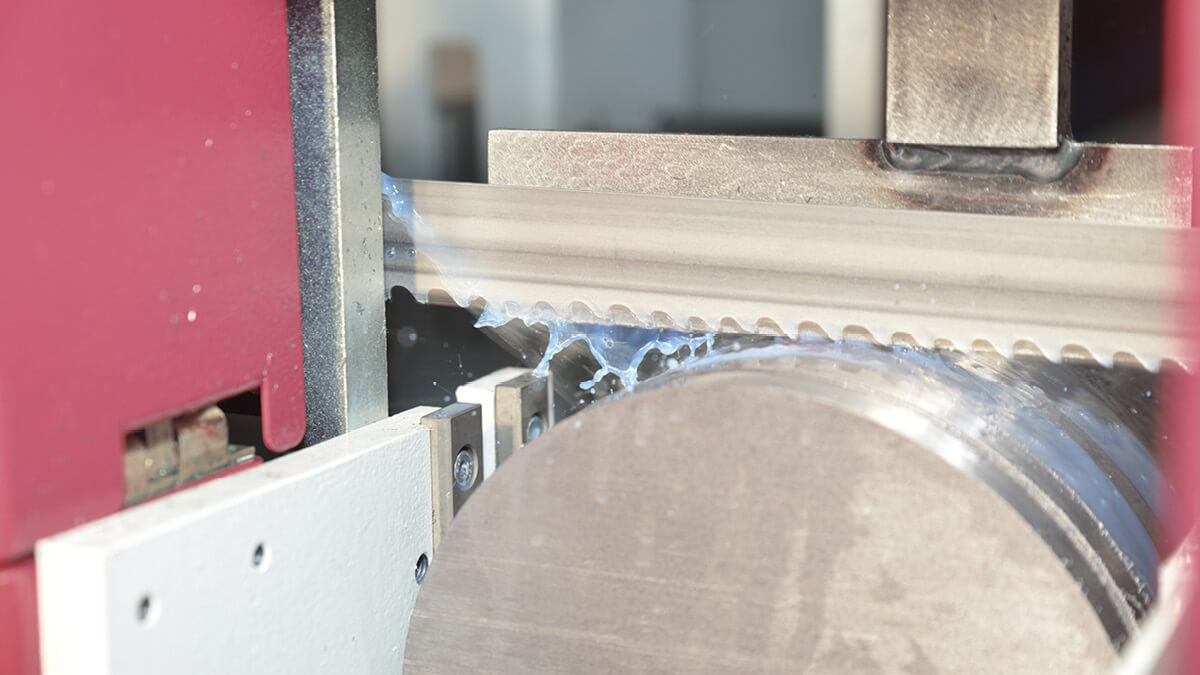
Due to the material’s exceptional hardness, tantalum is extremely difficult to saw. To make a successful cut at all, a carbide saw blade with a positive rake angle and constant monitoring of the cutting forces are necessary.
“The sawing process is very ‘tough.’ The band rumbles constantly, and you can hear just how difficult it is to saw tantalum. To achieve a reasonable cut quality despite this, you need a very stable base frame,” he continues.
This is where the solid machine base of the HBE321A Dynamic automatic band saw shines, combining a stable saw frame made of vibration-damping gray cast iron with a precise gantry-style guide system. The saw feed is precisely controlled by a ball screw and a servo motor. To protect the carbide saw blade from overload, the sensitive cutting pressure control system continuously monitors the cutting forces and dynamically adjusts the saw feed. “While sawing speed may not be our top priority, a reliable and safe cut without breaking the saw blade is the most important factor for our more expensive materials.”
Since the processing of molybdenum, tantalum, and niobium is subject to strict guidelines, every chip must be collected after sawing and returned to the melting process whenever possible. The large machine doors of the HBE321A Dynamic, as well as the chip conveyor—which can be removed from the band saw in just a few simple steps—are advantageous for accessibility and cleaning.
The intuitive operation of the BT65 control terminal, which uses simple pictograms, makes day-to-day control easier; in addition, the touchscreen can be operated even while wearing work gloves.
To minimize excess material removal, the cutting deviation is continuously monitored. If the cutting pressure reaches preset limit values, the feed rate and cutting speed are adjusted accordingly through cutting pressure monitoring.
Before making a purchase decision, H.C. Starck surveyed the entire sawing market and conducted sawing tests with various manufacturers. “These tests did not go nearly as well as the cutting tests at the Behringer Test Center. In terms of price, too, the competing machines offered us no advantage,” summarizes Project Manager Andreas Mund.
